Are you dreaming of owning your ideal home but worried about the costs? Bank of San Jose has got you covered!
We believe that everyone deserves a place they can call their own, a sanctuary where memories are made, and dreams are nurtured. That’s why we are committed to helping you achieve your dream house with our range of flexible loan options and competitive interest rates.
When it comes to financing your dream house, we believe that affordability should be at the forefront.
Here are five ways you can slash your monthly amortization costs and save big on housing loans:
1. Optimize Your Loan Amount:
At Bank of San Jose, we offer housing loans starting from a minimum of P100,000 up to P10,000,000. It’s essential to carefully assess your financial situation and determine the loan amount that suits your needs. By borrowing only what you require, you can minimize your monthly amortization costs.
2. Choose the Right Loan Term:
Selecting the appropriate loan term is crucial when it comes to managing your monthly payments effectively. With Bank of San Jose, you have the flexibility to choose a term ranging from 1 year to 10 years. Shorter loan terms may result in higher monthly payments but can save you a significant amount on interest payments in the long run.
3. Explore Payment Schemes:
Our payment schemes are designed to provide convenience and affordability. The monthly amortizations include both principal and interest, ensuring a manageable repayment plan. We work with you to customize the payment scheme that aligns with your financial capabilities and goals.
4. Enjoy Competitive Interest Rates:
Bank of San Jose offers competitive interest rates on housing loans, which are calculated on a diminishing basis. This means that as you make your monthly payments, the interest portion gradually decreases, allowing you to save more money over time. Take advantage of our attractive interest rates and reduce your monthly amortization costs.
5. Leverage Real Estate Mortgage as Collateral:
To secure your housing loan, Bank of San Jose accepts real estate mortgages as collateral. This provides a sense of security for both you and the bank. Collateral requirements include essential documents such as the title (OCT & TCT), tax declaration, vicinity map, certificate of tax payment, and lot plan. Our loan experts will guide you through the process and ensure a smooth experience.
Applying for a housing loan with Bank of San Jose is a straightforward process. To help you get started, here are the step-by-step instructions on how to apply for a housing loan:
Step 1: Engage with a Representative or Complete a Form
Initiate the process by either speaking with a representative at the Bank of San Jose or filling out an application form.
Step 2: Provide the Necessary Documentation
Ensure you have all the required documents ready before proceeding:
– Filled out Application Form:
Obtain the form from the Bank of San Jose’s website or visit a branch to obtain a physical copy. Provide accurate information and complete all required fields.
– Valid Identification:
Prepare a valid ID such as a passport, driver’s license, or government-issued ID card. Ensure it is not expired and includes a recent photograph.
– Proof of Income:
Gather documents that demonstrate your income and financial stability, such as employment certificates or bank statements.
– Cedula:
Obtain a valid community tax certificate (cedula) from your local government office to verify your residence and identity.
If you are using a property as collateral for the loan, gather the following documents related to the property:
– Title (OCT & TCT):
Collect the original copy of the Transfer Certificate of Title (TCT) or Original Certificate of Title (OCT) for the property. Ensure there are no encumbrances or legal issues.
– Tax Declaration:
Obtain the tax declaration document from the local assessor’s office, which confirms the assessed value of the property for tax purposes.
Step 4: Submit Your Application
Once you have gathered all the necessary documents, submit your application to Bank of San Jose.
Step 5: Await Evaluation and Loan Approval
Bank of San Jose will carefully evaluate your documents and assess your eligibility for the loan. The duration of this process depends on the volume of applications and the complexity of your case. You will be notified of the loan approval or rejection, along with any further instructions if required.
Remember, Bank of San Jose is committed to assisting you throughout the application process. If you have any questions or need additional guidance, don’t hesitate to reach out to their customer service team or visit the nearest branch. Good luck with your housing loan application, and soon you’ll be a step closer to owning your dream home!
Don’t let financial constraints hold you back from owning your dream home. Bank of San Jose is here to support you every step of the way. With our range of loan options, competitive interest rates, and personalized service, we can help you slash your monthly amortization costs and save big on your housing loan.
Contact us today, and let us help you turn your dream house into a reality!
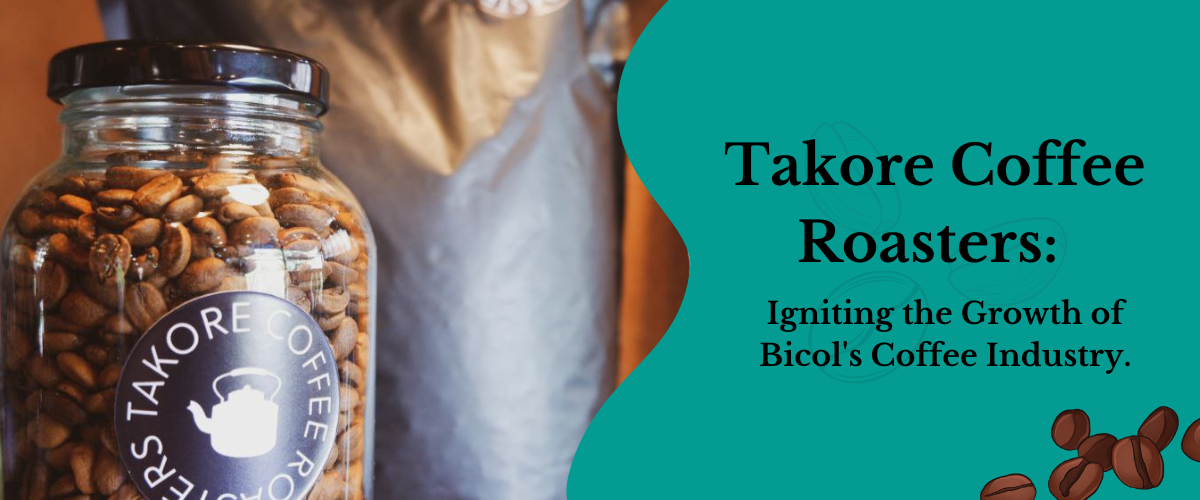
Takore Coffee Roasters is a local brand of roasted coffees sourced in the Philippines, around the world, and locally harvested coffees by local farmers at the majestic Mt. Isarog. It is not known to many locals that Mt. Isarog is abundant with coffee trees that were planted way back in the 70s-80s by an instant coffee company. With the Bicol Region’s geographic location and it being often visited by typhoons, the instant coffee company lost its interest in growing and harvesting the coffee trees. However, with the recent years as the typhoon’s usual track towards the Bicol Region diverted, the coffee trees started to gain momentum to grow with a lot of coffee cherries.
In 2023, an intervention was made by the Department of Trade and Industry (DTI) in which they connected Mr. Marion Briz of Takore Coffee Roasters to these farmers. The DTI had entrusted Marion with its visions in introducing and expanding the market for the Isarog Coffee. The farmers were delighted with the initiatives because of the joint efforts to help them earn for their harvest. To empower the local coffee industry especially the farmers of Isarog Coffee, Marion suggested a business model in which the farmers will not only grow and process the coffees but will learn too on how the industry works including wholesale, retailing, and café operations.
Marion was the one behind the idea of the Isarog Coffee branding. DTI was thinking of a brand that would have an impact that would originally represent it as homegrown and local. Marion had suggested to make it simple and name it after the mountain where they get the coffee and perhaps that’s how the industry addresses some coffee origins across the globe. He also thought that it will be a hype since it will be the first time that there will be a Bicol coffee origin. Also, instead of capitalizing for the hype formed in this project, he thought of giving back to the farmers who worked hard in growing and processing the coffee.
Marion proposed to buy the coffee cherries from farmers at P100 per kilo. If it is dry he can buy it up to P200 per kilo. It is a big leap to sustain the price already from its usual P50 per kilo price point, since roasted robusta coffee can be sold up to P600 as commercial grade with all its up to 50% of losses absorbed already. These price points are already at its usual market price given that the quality isn’t there yet, but the roastery is willing to pay and absorb losses just to push the industry forward and keep the farmers initiatives burning.
Currently, Takore Coffee Roasters have around more than 30 partners in which they provide supply for roasted coffee. Although some might not be regular since not everyone gets to be served by the Isarog Coffee due to limited supply on every harvest. Among the partners of Takore Coffee Roasters were UMA Farm Cafe at Sambo Farm in Carangcang, Magarao and Uptown Coffee at Carolina Grill in Carolina, Naga City.
Marion had admitted that in 2019, he started to venture the coffee because he likes watching vlogs of banchettos in other countries. This has inspired him to also make his own. He shared that there is this one banchetto in which it has alot of takore or kettle and has been serving different international coffee origins by just using a kettle. It was a very straightforward serving and amused him. Eventually, this fascination had led Marion to research more about coffee and found out that there are alot of kinds of coffee in the Philippines and that we grow 4 varieties of commercially-viable coffee namely, Robusta, Arabica, Liberica and Excelsa.
Marion first started studying about coffee roasting in 2015 but it was in 2019 when a farmer sent him a coffee that is not yet roasted and saw it as a sign that he has a calling to pursue business in coffee roasting. He immediately bought a palayok because he wanted to apply the Ethiopian Coffee Ceremony he learned in which in Ethiopia, they cook or roast the fresh coffee beans in a flat clay pot (palayok) every 5 pm then brew it. There is certain profile in the palayok that makes the taste of the coffee more unique. This eventually led Marion to start selling and serving coffee at Plaza Rizal in Naga using the coffee sent to him from Bukidnon. They were able to serve 300 servings daily and they were the very first pop-up coffee in the Philippines since they were able to do it pre-pandemic. It was during the 2020 pandemic when pop-up coffee started to boom.
When the pandemic came, Marion made coffee roasting as his pasttime. Before the lockdown, he had few loyal customers at the plaza who convinced him to sell roasted coffee. He was hesitant at first since roasting coffee needs a lot of effort in the making but they were able to convince him still because of the order of his loyal customers who had grandparents who has coffee tree in Ligao, Albay.
Throughout their life, they got used to homegrown coffee that is harvested, roasted and brewed. Finding out about the process and effort that Marion put into the coffee he serves, his loyal customers felt nostalgic and went on to support his small business. When he posted about it, more people ordered evetually ordered from him. Since it was during pandemic, many people just spend more time online and been seeing things that caught their interest.
By that time, Marion didn’t only attracted the homebrewers but also aspiring business owners who wants to put up their own cafes or pop-up coffee. This has expanded the market of, the then Kape Duman, now Takore Coffee Roasters and his supply chain in which they first started to cater home-coffee brewers then eventually became a local business supplier of coffee. Marion admitted that wholesale is what keeps the businesses alive these days. Business owners with cafes and restaurants became their new target market cause it has a lot of impact to the advocacy.
And just like all other entrepreneur, Marion also faced some challenges in the funding to keep his operations going like the lack of fund for the equipment’s to be used by the farmers. They still do not have the equipment for processing. Everything is being done with manual labor. They need drying beds for the harvested cherries and mill it.
So far Marion is still working out to acquire the equipment with the help of DTI and other partner governmnet agencies.They were able to canvass that the equipment they needed for the process would cost them P300,000. They were able to found out that one way to acquire funding is through the cooperatives or farmer’s association. But due to internal conflicts within the cooperatives, the family of farmers detached themselves from cooperatives. This created a delay for them to acquire funds.
However, Marion is pushing through proposing the aid from DTI for a shared service facility for coffee roasting and processing for these farmers and he is willing to teach and train them as well. So far he was able to spend P15,000 as a starting capital to pay the farmers.
Comparing the potential in coffee from palay, Marion knowns that most palay farmers eventually end up selling their land because the new generation is not that interested with agriculture. Also, most of them are contented with having their children finish school and end up getting employed. Coffee, on the other hand can bring in more opportunities for these farmers and their families.
According to him:
Coffee is a high value crop. Kapag ang farmer nakanuod mag roast ning coffee, makanuod maggibu nin coffee shop, kung makatapos man an aki ninda sa pagklase, si value halangkaw parin. Mas maencourage din si aki na magtabang sa magurang ninda sa kape.
While he knows that his advocacies will not make him rich, he still continue paying forward in ways he can and kept his advocacies through Kape Duman Coffee Talks which is a social enterprise. Through Kape Duman Coffee Talks, he was able to share his knowledge about coffee roasting and more. His coffee talks and trainings are for free and would usually charge minimal amount for the coffee used during the training.
“Tabang lang kita nin tabang ta ang karma man kayan pag nagbalik, magayon. Good karma.” He also shared.
As a coffee roaster, Marion also has investors at Takore Coffee Roaster. Although he had also considered loans for the business expansion. A corporation partner with DTI had recently granted them with loan so they are currently looking for a space where they can have their store mainly for coffee since as they have temporarily been serving coffee through Bamboombayan, a chicken restaurant that they also own.
He also shared his personal take on loans, “Dakulang factor ang loans sa business kasi masakit mag-ipon. Pag nag loan ka, makukua mo tulos si fund tapos magagamit mo rin siya agad. Si interes na binabayadan, breakeven lang kasi paka loan mo, na invest mo siya agad sa business para mag rotate si funds. Dakulang tabang talaga ang loans.”
If you are local entrepreneur who would want to venture business but still low on funds, you can avail Bank of San Jose’s Negosyo Loan.
You can make any business venture and endeavor happen with the help of a loan like Marion for Takore Coffee Roasters. The Bank of San Jose supports expansions of local businesses in which entrepreneurs can use an additional working capital or purchase fixed assets through the Negosyo Loan.
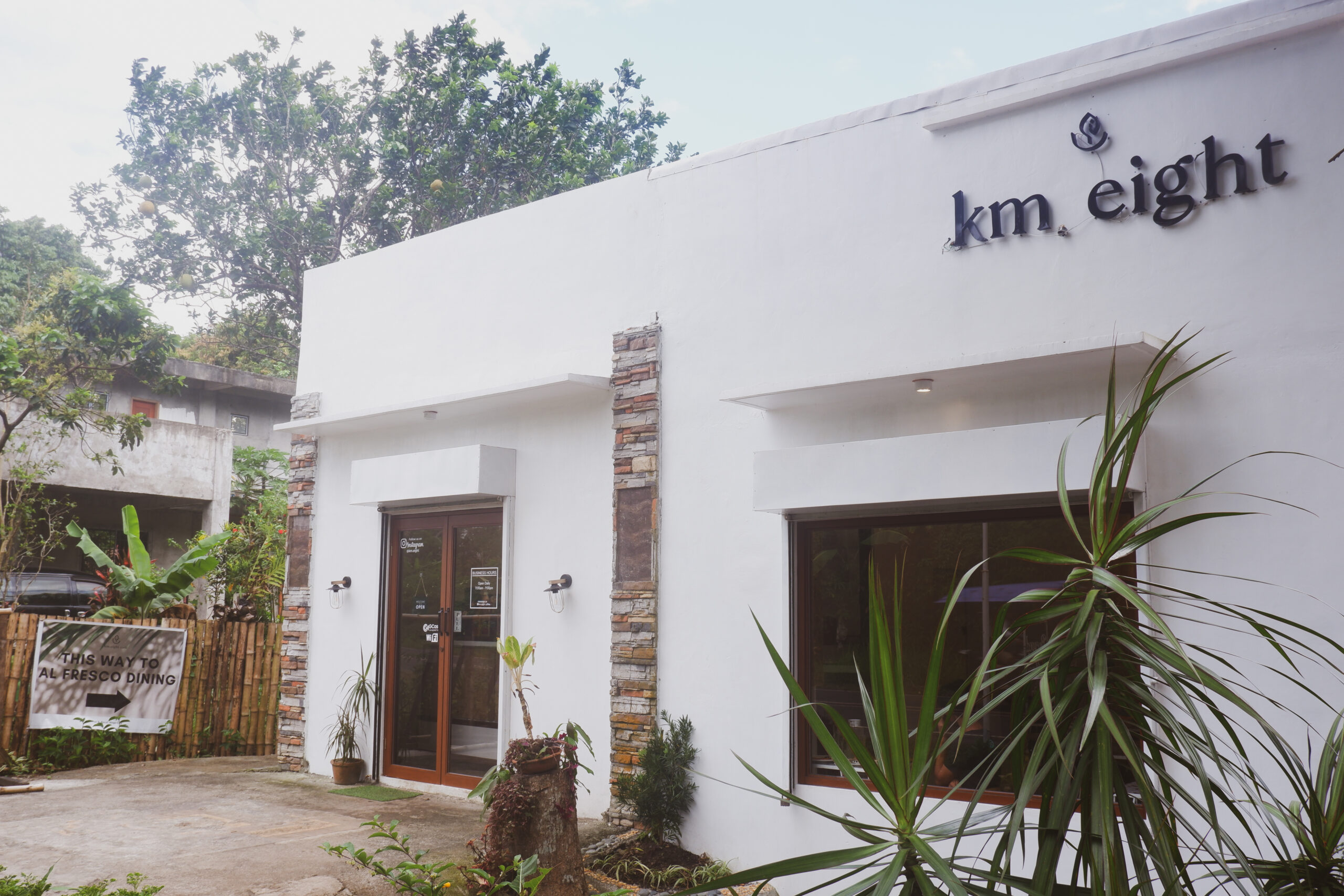
Km Eight is a cafe located in uptown Naga that started in the height of the pandemic in 2020. Its beginnings can be traced back to a simple alfresco cafe that Chloe Estrella started at Kilometer 8, Pacol, Naga City. According to her, the idea of starting up a cafe started when she had quarantined after going home for the first time since the borders were opened again to the local residents of Naga who were residing in Manila for work during the lockdown. Despite having the option of staying in a quarantine facility for her 14 days quarantine, she chose to stay in their old empty house in uptown Naga. While on quarantine, she noticed the number of bikers passing by and thought that it would be nice to put up a station for these bikers where they can rest to have some water break or coffee. Also passionate about coffee, the idea she just thought of eventually came to reality as she finally put up little by little an alfresco cafe which became Km Eight.
Providing comfort to the bikers, travelers and coffee enthusiasts through their little alfresco cafe, it was frequented by even those from Naga Proper to check out this thriving cafe uptown. As the restrictions during the pandemic continue to lighten, Chloe decided to expand the alfresco cafe she had started. She was able to realize the hassle during the rainy seasons and the inconveniences for her customers. The Km Eight now, is far from the Km Eight that Chloe had started. For their loyal customers, it was unrecognizable that they had to ask if the management changed. It was still the same management that started it all, there were just some improvements made to continue giving the customers the comfort they deserve when having their coffee uptown. From a kubo-kubo alfresco cafe to an aesthetic indoor cafe, Km Eight came a long way.
Thriving a business during the pandemic wasn’t easy for Chloe. She had also faced challenges, including hiring the right people and being uptown. Km Eight operates from 10 am to 9 pm and some of her staff had problems when going home since there were no modes of transportation by 7 pm and some also had problems going to work when the rain was pouring hard. Chloe had it resolved by having her staff stay in. Being a cafe located uptown has some challenges too in the business; it is not easily reached by those from Naga Proper unless they have a service or car since public transportation is also difficult in the area. There were times when the food traffic was not that strong, so she had to market the cafe properly since there was a time when their sales went down so, she relied on social media marketing. Also, cafes are everywhere in Naga, especially in downtown, so the competition was really high. This has made Chloe continuously improve Km Eight, not just its physical structure but also its service and the quality of coffee that they make.
With the expansion and improvement of Km Eight, a lot of money was invested for it. Chloe was thankful that she had relatives overseas who had invested in her business and pitched in for the expansion and improvement of the cafe. Moreso, she also added the total earnings of the business to start the renovations and to add some chairs, supplies, and equipment. She was able to manage the profits well because she made sure that the earnings of the business is not entirely hers but for the business itself to keep the cash flowing.
“Make sure yung pera sa business ay para sa business talaga. Dapat yung kinikita sa business, yun din yung gagamitin sa pag improve, pang bili ng supplies at may salaray din ako. Dun ko minamanage yung kailangan hindi magalaw kaya may sariling bank account yung business para sa funds na pumapasok dito,” shared Chloe.For her to manage the cash flow well, she treats herself as if she is not the owner. She have a separate bank account for herself and would just a lot a salary for herself every month like any other employee because if she will be acting and feel like the owner, she will continue to spend the money that they are earning.
Like any other business owner, Chloe also considered loaning in a bank for expansion. However, the number of requirements, documents, and high-interest rates have prevented her from doing so. She had put the thought aside, although she is still open to it in the future if she will be needing it. She’ll grab it if there’s a chance as long as she has the capacity to pay for it.
Starting with a low capital, Chloe was able to utilize the old structure of the hardware where Km Eight stands. Her machine still needs an upgrade, and she still looks for suppliers online offering low prices to keep the business going. But her small efforts eventually led to her making a mark in uptown Naga. There is a difference between seeing how far she has come and where she has started.
“I thought of a lot of things to further improve the cafe and I am inspired to do more to be better in what I do because, at the end of the day, it is how you make an impact.” She said. Chloe has been hands-on in managing the cafe and sometimes makes the orders herself since extra manpower is needed, especially when there are a lot of customers. She also admitted that having this kind of business is challenging but fulfilling for her because when she sees people are satisfied with the product that they serve, she get to have the motivation to keep getting better and manage it well so that she will not miss out on anything
Her advice to those aspiring to start a business, “Just start. When you start, you learn. Along the way, makukuha mo na rin lang yan. Wag ka maging perfectionist agad. Minsan kalaban natin and imposter syndrome saying, ‘what if hindi mag work?’ Pero what if mag work nga?”
Like Chloe, you might want to start your own business too, but sometimes we are afraid of the risks. But what if it works? Don’t you think that it is worth a shot? Hearing the word loan may make you feel intimidated as well, considering the requirements you have to meet. But you can put your worries to ease because at Bank of San Jose you can easily avail Negosyo Loan that is being granted to small and medium-scale enterprises with minimum requirements. As long as you have filled out the form, have 1 valid ID, Proof of Income, Medical Certificate, and Cedula, you can avail of a Negosyo Loan amounting to a minimum of P100,000 to P5,000,000 with a term of the loan from 1 to 5 years.
Servisit is a start-up cleaning services business started by Owen Rosco under the BECALL (Bicol Entrepreneurship and Empowerment Center for Accelerating Local Livelihood) Technology Business Incubator. But before Servisit focused on providing cleaning services in Naga City and nearby municipalities, it first provided computer services. With Owen’s background in electronic engineering, Servisit initially started by offering computer services and hiring onboard computer technicians. However, things were not systematized at that time. The onboard technicians also had other jobs and only considered Servisit as an additional income. Even so, with the rough beginnings, another opportunity came for Servisit based on recommendations which led them to focus on venturing out into cleaning services.
According to Owen, someone recommended a person who is very good at cleaning. Seeing the potential of offering cleaning services, they hired more cleaners on board, knowing that they get to help these people earn a living and, at the same time, provide cleaning services to those clients who need them. Owen realizes how some people hire cleaners to clean their houses, offices, and dorms because they cannot focus on cleaning due to having busy lives. Most of their clients are busy students, workers, and those with old parents who cannot move around to clean their houses. Servisit eventually found a new sense of purpose in offering cleaning services that are tailored to their client’s needs. They started offering quick cleaning, general cleaning, and dorm cleaning. An upgrade of additional services includes washing the dishes and folding the laundry.
Owen shared that one of the challenges he had to face in starting the business was talking to people. Admitting he is an introvert, “pinakatumatak na challenge is yung kumausap ng tao, kausapin yung taong may problema kasi ang goal ng business is to earn pero how do you earn if you cannot solve the problem of people.” Since he started Servisit, Owen has tailor fitted the goal of Servisit to solving people’s problems. Despite having a business that started as self-funded and mostly coming from his own allowances along with his two other co-founders, as time went on, they were able to earn little by little to keep the business going. Initially starting with P500, they bought the cleaning materials and equipment to be used by the cleaners. Each co-founder also added P1,000 for their starting capital.
With plans for the expansion in the finances, loaning in a bank is part of their considerations if there’s a come a stage that they would need it in the business and if they can already afford to pay for it. Owen invested in the business with the belief that “if your goal is to make an impact, the money will follow.” He wanted to focus on the improvement of the services they offer and believed that their earning would eventually grow in time.
As a young CEO of a start-up business, Owen said that it was fulfilling for him and that he loved the experiences and the learnings in the business field. It was difficult for him to balance studying, business, and his personal life, but what kept him going is his contributions and the opportunities he opened to the people because of Servisit.
“Wag ka pumasok sa business kapag hindi mo gusto yung ginagawa mo. Dapat may goal ka for venturing this kasi kung hindi ka motivated, kung hindi ka patungo sa goal na yun, wala siyang patunguhan. Dapat may sense of purpose ka.” Owen concluded. Owen is among the local entrepreneurs who had a vision as he ventured out this business with hopes of creating a positive impact to the lives of people through Servisit.
Do you also want to start up a business like Servisit? You can always make things happen with Bank of San Jose’s Negosyo Loan. The Bank of San Jose assists small and medium-sized business owners in expanding and succeeding in their business ventures which entrepreneurs can use as additional working capital or purchase fixed assets. Through the Negosyo Loan, you can loan P100,000 to P5,000,000 between 1-5 years with a payment scheme of monthly amortization, including principal and interest.
Pamitisan is from the Bicol word “bitis” which means“feet”. Made from pre-owned clothes, affordable and durable shoes with a cause for a sustainable environment and local community, Pamitisan came to be. Keenan Ivory Lee Duliesco and his classmates made this their thesis in college, and who would have thought that this would eventually cause a greater impact.
It was in the middle of the pandemic when Keenan and his classmates started making shoes out of old or used clothing, mostly from jeans. According to him, he first got the inspiration for the product from seeing kids outside selling rags and thought of making something out of old clothes for their thesis. Despite not having knowledge on shoemaking, they pushed through making their own research to create a new innovation which led to the making of the “rag shoes”.
With five members in their group, they first contributed P500 each for the materials to be used to make the product. Starting from scratch with no knowledge in shoemaking or business, they were able to make most of their resources as the production is low cost and has low labor cost. The Bicol State College of Applied Sciences and Technology (BISCAST) saw potential in the product made by the group of Keenan and chose it to represent their school in trade fairs for local products. What eventually started as a thesis became a pride and grew bigger as it also continued to attract interest for their cause and purpose.
Throughout their production of the “rag shoes,” which became “Pamitisan”, Keenan shared that they also faced many challenges as they started their business. Among those challenges was how to sell their product and for people to like it. Shoes are not considered a basic need and something that people do not buy that often. Also, the pandemic has limited their reach to the market. They don’t know how to introduce it outside of school, so they solely rely on social media marketing. They were able to build a strong product image that attracted a lot of interest because it has a social impact. For every pair of Pamitisan Slip-on shoes sold, 10% will be donated to Pamitisan’s chosen beneficiaries. Moreso, they also encourage donations of pre-owned clothes to have a 50% discount on Pamitisan Slip-on Shoes.
Joining several trade fairs through DTI, Pamitisan was able to win several awards at the recently held DTI Ferria de Camarines, which exhibited different fashion wear. They were able to win the Racketera Award (Best in Marketing) for putting up a booth not just to exhibit their product but they also put up a donation box to encourage donations of pre-owned clothes for the production of their product. Furthermore, they also won the Best Innovative Product in Footwear for using recycled materials.
As Pamitisan got to be known for their product and their cause, their connections grew, and so did the mass orders of Pamitisan Slip-on Shoes that they had considered mass production. From 5 members to 15 members, as their product was chosen to represent their school in trade fairs, each member contributed P1,000, which made them have a P15,000 starting capital to keep the production and operations going.
While open to the possibilities of getting a loan in the bank to expand their finances to hire more people for labor and buy more materials and additional equipment to be used for production, Keenan was advised by their mentor to have their product improved first because they were able to earn well from it and was able to utilize their resources for the production so far. From P15,000 capital, the sales of Pamitisan in 4-5 months went up to P60,000 with a net of P30,000. Each pair of Pamitisan Slip-on Shoes now costs P750, and 10% of it goes to chosen beneficiaries.
Take it one step at a time, don’t rush. Trust the process and make every step a purpose.” said Keenan.
This is his advice to all other young aspiring entrepreneurs. As the founder of Pamitisan, he shared his plans to partner with BISCAST to let the school invest in his business and become an investor to push forth mass production.
Pamitisan started in 2020. Starting a business right in the middle of a pandemic was not easy. But because of determination and passion in creating a social impact, a business thrives and continues to make its mark in the local community.
Are you also a local entrepreneur who wants to expand your business but low on funds? You can avail Negosyo Loan at Bank of San Jose. The Bank of San Jose supports Small and Medium-Scale Entreprises. Not everything starts big but with Bank of San Jose, your small or medium-sized businesses could grow big. Negosyo Loan could help in expanding and further succeed in your business ventures.
As a small business owner in Camarines Sur, finding the right vehicle to support your operations can be a critical factor in its success and growth.
With a wide range of options available, it’s important to choose a vehicle that is both efficient and cost-effective while also meeting the unique needs of your business. In this article, we will explore the top vehicle choices for small businesses in Camarines Sur, highlighting the key features and benefits that make each option a great choice for maximizing efficiency and cost-effectiveness on the road. Whether you’re looking for a reliable vehicle for deliveries, a comfortable MUV, or something in between, this guide will help you make an informed decision for your business.
Best Vehicles for Small Businesses in Camarines Sur
1.Hatchback
Hatchbacks are an excellent choice for small businesses in Camarines Sur due to several key advantages. They are a practical and economical choice for small businesses in the province. With their combination of affordability, efficiency, versatility, and convenience, they offer a great balance of features for businesses looking to maximize their budget and resources.
Here is a list of reasons why Hatchbacks are good for small businesses:
Compact size
Fuel Efficiency
Versatility
Cost-effectiveness
Low maintenance
Easy to park
Eco-friendly
A hatchback can be useful for a variety of small businesses, including:
Delivery services: Companies that deliver packages, food, or small items within a local area can benefit from the maneuverability and fuel efficiency of a hatchback.
Service businesses: Plumbers, electricians, or HVAC technicians can use a hatchback to transport tools and equipment to job sites.
Sales and marketing: Representatives who need to visit clients or attend trade shows can use a hatchback for efficient and cost-effective transportation.
Catering: Catering companies can use a hatchback to transport food, cooking equipment, and supplies to events.
This is not an exhaustive list, and the specific type of small business that can benefit from a hatchback will depend on the needs of the business and the nature of its operations. Due to their smaller size and simpler design, hatchbacks typically have lower maintenance costs compared to other types of vehicles.
Browse through the newest models of a hatchback here
2. Pickup Truck
Pickup trucks are a popular choice for small businesses in the province due to their versatility and practicality. One of the biggest advantages of pickup trucks is their large cargo space, which allows businesses to transport a variety of goods, equipment, and supplies with ease. This makes them ideal for a range of industries, from construction and landscaping to deliveries and service work.
Here is a list of reasons why a Pickup Truck is good for small businesses:
Versatile cargo space
Towing capabilities
Ruggedness and durability
Cost-effectiveness
Comfort and convenience
High resale value
Brand reputation
Pickup trucks can be a useful vehicle for various small businesses, including:
Contractors: Builders, carpenters, electricians, and other contractors can use a pickup truck to transport tools and materials to job sites.
Delivery services: Companies that need to transport larger items, such as furniture or appliances, can use a pickup truck to make deliveries.w
Agricultural businesses: Farmers, ranchers, and other agricultural businesses can use a pickup truck for transporting crops, livestock, or equipment.
Home repair and remodeling: Handymen and home repair professionals can use a pickup truck to transport tools and materials to job sites.
A pickup truck is a one-time investment that can be used for multiple purposes, saving small businesses money in the long run. Pickup trucks are built to withstand tough terrains and challenging conditions, making them ideal for small businesses. Modern pickup trucks offer comfortable and convenient features such as air conditioning, power windows, and audio systems.
Browse through the newest models of Pickup Trucks this 2023 here
3. Multi-Purpose Vehicle (MPV) or Multi-Utility Vehicle (MUV)
MPVs offer a combination of practicality, versatility, and cost-effectiveness that makes them a great option for small businesses in the province. Whether you’re transporting clients, employees, or equipment, an MPV can provide a reliable and comfortable solution for your business needs.
Here is a list of reasons why a Multi-Purpose Vehicle (MPV) is good for small businesses:
Versatility and spaciousness:
Safety and Security
Modern features
Fuel-efficiency
Professional appearance
Comfort
Cost-effectiveness
Reliability
A Multi-Purpose Vehicle (MPV) or Multi-Utility Vehicle (MUV) can be useful for various small businesses, including:
Transportation services: Use MUVs to transport passengers to and from areas in Bicol; Naga, Legazpi, Iriga, Nabua, etc.
Tour and travel companies: Tour and travel companies can use an MPV or MUV to transport small groups of tourists to different locations, such as Caramoan and around tourist attractions in Camarines Sur
Delivery services: Companies that make deliveries of larger items, such as furniture or appliances, can use an MPV or MUV to transport these items and multiple workers.
Event services: Event planners, photographers, or videographers can use an MPV or MUV to transport multiple people and equipment to events.
MPVs are fuel-efficient and offer low maintenance costs, making them a cost-effective option for small businesses. MPVs are equipped with modern features such as air conditioning, entertainment systems, and advanced navigation systems. With a sleek and professional appearance, MPVs provide a professional image.
Browse through the newest models of MUVs this 2023 here
4. Multi-Cab
A Multi-cab is a compact and versatile vehicle that can be a great option for small businesses in the province that require a versatile, reliable, and cost-effective vehicle for their day-to-day operations.
Here are some of the reasons why a Multi-cab can be beneficial for small businesses:
Space and versatility
Cost-effectiveness
Durability
Maneuverability
Customizability
A multicab is a type of small commercial vehicle that is similar to a minivan or pickup truck. They can be useful for various small businesses, including:
Delivery services: Businesses that make local deliveries of small items, such as packages or food, can use a multicab for its compact size and maneuverability.
Agricultural businesses: Farmers can use a multicab to transport crops, livestock, or equipment within Camarines Sur
Contractors: Handymen, electricians, and other contractors can use a multicab to transport tools and materials to job sites.
Home repair and remodeling: Home repair professionals can use a multicab to transport tools and materials to job sites.
Multi-cabs are suitable for small enterprises that need to transport staff and goods. They are economical and fuel-efficient, helping small enterprises cut expenditures. Businesses that need a durable, reliable vehicle should choose multi-cabs. Multi-cabs are compact and easy to drive, making them perfect for limited provincial roads.
5. Tri-bike or Tricycle
A Tri-bike, also known as a tricycle, can be a good choice for small businesses in the province due to its compact and maneuverable design, making it ideal for navigating narrow roads and tight spaces. Its ability to carry cargo or passengers makes it a versatile option for businesses in need of transport for deliveries or transporting goods and people. Additionally, it offers low operating costs and fuel efficiency, making it an economical choice for small businesses with limited budgets. Its small size and low maintenance also make it easy to manage and maintain, providing a reliable and cost-effective transportation solution for small businesses in the province.
Here are some of the reasons why a Tri-bike can be beneficial for small businesses:
Cost-effectiveness
Maneuverability
Fuel Efficiency
Versatility
Easy to Park
Environmentally Friendly
Tri-bikes are a cost-effective option for small businesses, as they are relatively cheap to purchase and maintain compared to larger vehicles. They are highly maneuverable, making them ideal for navigating narrow streets, tight corners, and busy traffic areas in the province. Tri-bike operations also leave a smaller carbon footprint than larger vehicles, which makes them an environmentally friendly option.
A tri-bike can be beneficial for various types of small businesses, including:
Water refilling stations: Tri-bikes are ideal for transporting water containers for delivery services in nearby areas
Livestock: Pigs and other livestock can be transported using a customized tri-byke going to slaughterhouses or for delivery.
This list’s diversity of cars demonstrates that not every transportation is appropriate for every type of company. Although not all business owners can afford to buy one, others may want to have the hatchback so that it may serve as a family service vehicle. A garage or other appropriate and secure storage space is also required for whichever car is selected for the business, in addition to the actual vehicle cost. This may raise the additional cost as well.
Advantages of buying a car for your small business
Increased mobility and flexibility:
Having a dedicated vehicle for your small business allows you to move around freely around and about the entire Bicol Region without having to rely on public transportation or rental cars.
You can go to Downtown NagaThis added mobility and flexibility can help you better serve your customers and make more productive use of your time.
Cost-effectiveness:
While buying a car can be an initial investment, it can be a cost-effective option in the long run compared to continuously renting or using a personal vehicle for business purposes. Delivery services and constant going around on a commute will be much more expensive in the long run.
Improved image and professionalism:
A well-maintained, branded vehicle can give your small business a more professional image, making a positive impression on customers and clients.
Customizability:
A company-owned vehicle can be customized to meet the specific needs of your business, such as adding a rack or storage for equipment and supplies.
Dedicated space for advertising:
A company-owned vehicle can serve as a mobile billboard, helping to increase visibility and awareness of your brand.
Imagine going around Downtown Naga showing off your brand and what it can do – this is an instant advertisement!
Better control over maintenance and repair costs:
By owning your vehicle, you have more control over maintenance and repair costs, making it easier to budget for these expenses and ensure your vehicle is always in top condition.
Having a car loan from a bank can be a great financial solution for small businesses. The loan can provide the necessary funds for the purchase of a vehicle which provides a solid foundation for the growth and success of a small business, among many others.